
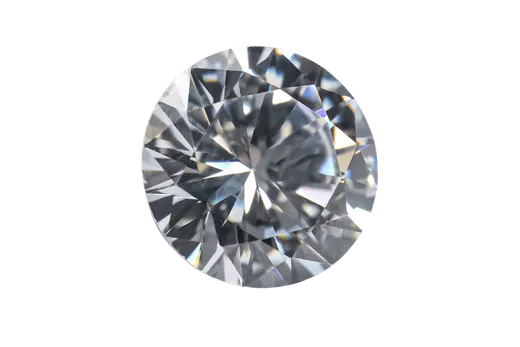
Lab-Grown Diamond
A lab-grown diamond is identical in composition to a natural one and indistinguishable by eye, only born in a laboratory; the real difference is not in beauty but in rarity and where value is heading.
A lab-grown diamond is identical in composition to a natural diamond (pure carbon, hardness 10) and indistinguishable by eye, only grown in a laboratory (CVD or HPHT). The real difference is not in beauty but in rarity and value — its price keeps falling and it holds value weakly, better seen as beauty to wear than an heirloom asset.
About Lab-Grown Diamond
A lab-grown diamond is a real diamond grown in a laboratory, identical in composition, structure and hardness to a natural one, not an imitation; the two main methods are HPHT and CVD. It too is crystalline carbon, differing only in where it forms — a laboratory instead of the earth. So it is not an “imitation diamond” but a diamond through and through.
Why Choose a Lab-Grown Diamond
A lab-grown diamond gives the same fire at a far more affordable price; the same budget buys a larger, cleaner, whiter stone. If what you want is the sparkle itself rather than rarity and resale, a lab-grown diamond is the rational choice. Coloured lab-grown diamonds (pink, blue) especially deliver, at a reasonable price, the colours that natural fancy diamonds command a fortune for.
The Truth About Lab-Grown Diamond
Lab-grown and natural cannot be told apart by eye, needing instruments; its price keeps falling and it holds value weakly, and the certificates have diverged.
- Truth one: indistinguishable by eye, and by loupe too — a laboratory spectrometer is needed to identify the growth method (CVD / HPHT).
- Truth two: the price keeps falling. From 2022 to 2025, the wholesale price per carat fell about 70%.
- Truth three: it holds value weakly. Resale is often only 20–30% of the original, far below natural.
- Truth four: the certificates have diverged. From late 2025, GIA describes them as “Premium / Standard” and inscribes “LABORATORY-GROWN” on the girdle.
Lab-Grown Diamond on the Market
Tell apart “a disclosed lab-grown diamond” and “a lab-grown sold as natural”; the keys are the certificate and girdle inscription.
| Type | Traits | Price | How to tell |
|---|---|---|---|
| Disclosed lab-grown (with certificate) | Transparent, legitimate | Low–mid | Girdle “LABORATORY-GROWN” |
| Lab-grown sold as natural | Looks no different from natural | A trap | Certificate + girdle number |
| Big white stone, no certificate | Unknown provenance | — | Refuse to touch it |
| Moissanite | Silicon carbide, not diamond | Low | Dual tester |
Before You Buy
Decide first whether you want “beauty to wear” or “heirloom value”, which decides lab-grown or natural; and be sure to read the “Laboratory-Grown” wording on the certificate and the girdle inscription.
- Decide whether you want beauty to wear, or heirloom value.
- Insist on an authoritative laboratory certificate; read “Laboratory-Grown” and the girdle inscription.
- Understand its limited future resale, and spend within reason.
- When choosing natural and lab-grown side by side, match the certificate especially — do not rely on the eye.
FAQ
Is a lab-grown diamond a real diamond?
Yes. Identical in composition, structure and hardness to a natural diamond, not an imitation; the only difference is its origin — a laboratory rather than the earth.
How do you tell a lab-grown from a natural diamond?
Neither eye nor loupe can; it takes a laboratory spectrometer, and the girdle is inscribed "LABORATORY-GROWN".
Does a lab-grown diamond hold value?
Weakly. Resale is often only 20–30% of the original, far below natural — treat it as beauty to wear, not an investment.
Why is lab-grown diamond getting cheaper?
Mature technology and surging supply; from 2022 to 2025, the wholesale price per carat fell about 70%.
What certificate do I need for a lab-grown diamond?
An authoritative report such as GIA's LGDR; read the "Laboratory-Grown" wording and the girdle laser number.