
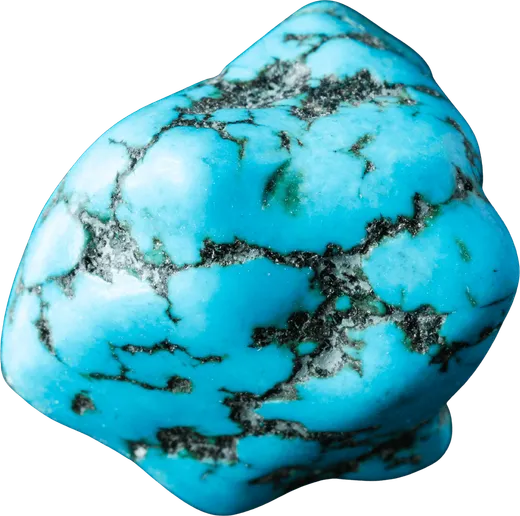
Turquoise
Most turquoise on the market is "stabilized", because natural material is usually too soft and porous; the natural, untreated, hard material is the most prized.
Turquoise is a hydrated phosphate of copper and aluminium, sky blue to blue-green, porous by nature, Mohs hardness 5–6. Most on the market is “stabilized” to harden it and fix the colour; naturally hard material (such as Arizona’s Sleeping Beauty and Persian) is most prized. It is a December birthstone, porous and wary of water and chemicals, and needs careful keeping.
About Turquoise
Turquoise is a hydrated phosphate of copper and aluminium, sky blue to blue-green from copper, porous by nature, Mohs hardness 5–6. It is one of humanity’s oldest ornamental gems, its sky-like blue seen since antiquity as a talisman and a gift from the heavens. Because it is porous and uneven in texture, its hardness and durability depend largely on whether it has been treated.
Why Choose a Turquoise
Turquoise’s sky blue is warm and strong, a symbol of protection and good fortune, a December birthstone, and the soul of ethnic and bohemian style. From ancient Egypt and Persia to Native America, turquoise spans thousands of years of civilisation. If you love a blue with story and warmth, it is one of the few stones that give you colour and historical weight at once.
History & Famous Stones
Turquoise is one of humanity’s oldest ornamental gems — from ancient Egypt and Persia to the Americas, that sky blue spans thousands of years of civilisation. Two great civilisations tell the whole of this blue:
- Ancient Egypt and Tutankhamun: Egyptians mined turquoise in the Sinai as early as 3200 BCE and dedicated the mines to Hathor, goddess of love and beauty, known as the “Lady of Turquoise”; Tutankhamun’s gold mask is inlaid with turquoise and lapis lazuli.
- Persia and the Aztecs: the Persian turquoise of Nishapur, Iran has set the quality standard for thousands of years; the Aztecs set countless tiny pieces into turquoise mosaics — the double-headed serpent in the British Museum is a famed example.
The Truth About Turquoise
Most turquoise on the market is “stabilized”, because natural material is usually too soft and porous; the natural, untreated, hard material is the most prized.
- Truth one: mostly stabilized. Porous natural material is pressure-soaked with colourless resin or polymer to harden it, fix the colour and ease cutting — the market norm.
- Truth two: natural untreated is prized. Material like Arizona’s Sleeping Beauty and Iran’s Nishapur (Persian) is dense and hard enough to cut without treatment.
- Truth three: dyeing and “resin-then-dye”. Poor material is dyed to fake a high colour, and other minerals (such as magnesite) are dyed blue to impersonate it — stay alert.
- Truth four: porous means it changes colour. Natural turquoise “drinks” oils, cosmetics and sweat, shifting from blue to green over time — one reason for stabilizing.
Turquoise on the Market
Tell apart natural untreated, stabilized, dyed, and other minerals dyed blue to impersonate it.
| Type | Traits | Price | How to tell |
|---|---|---|---|
| Natural · untreated | Hard, true colour | Highest | Origin (Sleeping Beauty / Persian) |
| Stabilized | Hardened, colour-fixed, mainstream | Mid | Standard; must be declared |
| Dyed | Colour too even and vivid | Low | Dye pools in the veins |
| Other mineral dyed blue | Not turquoise | Low | Certificate, wrong composition |
Before You Buy
Ask first whether it is natural untreated, stabilized or dyed; it is porous and wary of water and chemicals, so keep it from perfume and sweat, avoid ultrasonic, and wipe only with a soft cloth.
- Ask about treatment: natural untreated, stabilized, or dyed — worlds apart in value.
- For a natural high colour, confirm origins like Sleeping Beauty and Persian, with a certificate.
- Porous and wary of water and chemicals: avoid perfume, cosmetics, sweat and cleaners, and do not soak it.
- Clean only with a barely-damp soft cloth, never ultrasonic or steam; store apart from harder stones.
FAQ
Why does turquoise turn from blue to green?
It is porous and absorbs oils, cosmetics and sweat, so the tone shifts from blue toward green over time. This natural trait is why the market so often "stabilizes" it.
Is stabilized turquoise fake?
No. Stabilizing soaks colourless resin in to harden and fix the colour; the material is still real turquoise, only worth less than natural untreated stones — ask for disclosure when buying.
What counts as good turquoise?
A true colour (sky blue or blue-green), dense texture, and natural untreated material is most prized; Sleeping Beauty and Persian are famous names.
Can turquoise touch water?
Best not. It is porous, and long soaking or contact with chemicals discolours and damages it; take it off before hand-washing, bathing or swimming.
How do I clean turquoise?
Wipe gently with a barely-damp soft cloth; never ultrasonic, steam or chemical cleaners, and store it apart from harder stones.