
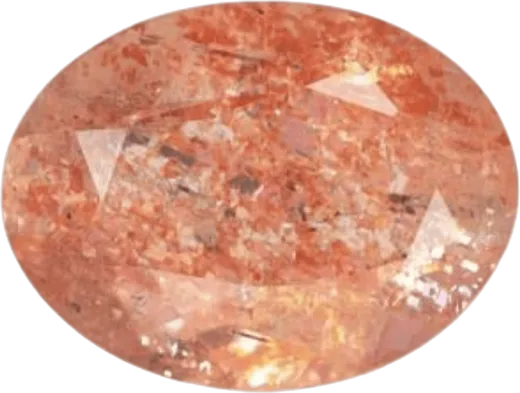
Sunstone
Sunstone's flashing gold light is called schiller — the reflection of tiny copper platelets inside; Oregon is the world's only source of copper-bearing sunstone.
Sunstone is a gem of the feldspar family, its flashing gold light called schiller (aventurescence), from the reflection of tiny metallic platelets within, Mohs hardness 6–6.5. Copper-bearing sunstone from Oregon (USA) needs almost no treatment — a natural, distinctive warm-toned choice; with cleavage and a little brittle, it asks to be worn with care.
About Sunstone
Sunstone is a gem of the feldspar family, its gold flash called schiller (aventurescence), from tiny directional metallic platelets reflecting light within. Mohs hardness 6–6.5. In Oregon’s sunstone the flash comes from natural copper platelets — the world’s only source of copper-bearing sunstone — and that warm gold to orange-red light is its signature.
Why Choose a Sunstone
Sunstone offers a flowing warm-gold flash at an affordable price, and the copper-bearing Oregon variety is almost entirely natural and untreated — distinctive and honest. Its light is like a setting sun scattered on water, warm and alive, a symbol of brightness and positive energy. If you want a warm-toned piece with natural flash and no one else’s exact stone, sunstone is a rewarding choice.
History & Famous Stones
The most prized of the sunstones is the copper-bearing sunstone of Oregon, USA — the world’s only sunstone with natural copper platelets, and since 1987 the official state gemstone of Oregon. A state’s gem, found by accident:
- Oregon’s state gem: this naturally copper-bearing feldspar owes its shimmering gold flash (schiller) to directional copper platelets within, a warm gold to orange-red that is its unmistakable signature.
- A discovery by accident: the famous Ponderosa mine in Harney County, Oregon, was uncovered in the summer of 1980 when a logging operation cut through the ground and cowboys running cattle found clear crystals on the surface — from high desert to the international market.
The Truth About Sunstone
Oregon copper-bearing sunstone is almost never treated; but the market also has copper-diffused feldspar, and sunstone has cleavage and is a little brittle.
- Truth one: the Oregon copper-bearing variety is natural and untreated. Heating and irradiation do nothing for its colour, so it comes to you as it is.
- Truth two: watch for “copper-diffused” feldspar. The market has had copper-diffused feldspar (such as some andesine) posing as natural copper-bearing sunstone — mind the origin and certificate.
- Truth three: cleaved and a little brittle. Feldspar has two cleavage directions and lower toughness, chipping on a hard knock — better a ring worn occasionally.
- Truth four: the flash decides its beauty. The schiller must sit face-up and even to show its worth.
Sunstone on the Market
Tell apart natural copper-bearing sunstone, copper-diffused feldspar and glass imitation (goldstone).
| Type | Traits | Price | How to tell |
|---|---|---|---|
| Oregon copper-bearing · natural | Natural copper-platelet schiller | Higher | Origin, natural copper platelets |
| Ordinary feldspar sunstone | Gold flash, no copper | Affordable | Common, paler colour |
| Copper-diffused feldspar | Even colour, artificial | Low | Certificate, diffusion traits |
| Glass imitation (goldstone) | Too-regular sparkle | Low | Gas bubbles, contrived flecks |
Before You Buy
Check that the face-up schiller is even; Oregon copper-bearing is the natural fine choice, and guard against copper diffusion; it is a little brittle, so no ultrasonic, and avoid knocks.
- Look face-up: the gold flash should sit face-up and even; off to the side or sparse loses points.
- For natural copper-bearing, confirm the Oregon origin and a certificate, and guard against diffused feldspar.
- Cleaved and a little brittle: avoid hard knocks, and wear a ring only occasionally.
- Clean with warm water and a soft cloth, never ultrasonic or steam.
FAQ
Is sunstone's gold flash natural?
In Oregon copper-bearing sunstone the flash (schiller) comes from natural copper platelets and is inborn; but the market also has glass imitation (goldstone) and copper-diffused feldspar, to be told apart.
How does sunstone relate to moonstone?
Both belong to the feldspar family, a "sun and moon" pair — sunstone shows a warm gold aventurescence, moonstone a cool blue sheen.
Can I wear sunstone every day?
At 6–6.5 with cleavage and a little brittle, it suits earrings and pendants; wear a ring occasionally and clear of knocks.
How do I clean sunstone?
Warm water and a soft cloth; never ultrasonic or steam, and avoid hard knocks and sudden temperature change.
Why is Oregon sunstone dearer?
It is the world's only sunstone with natural copper platelets, its flash distinctive and almost never treated, so it is more prized than ordinary feldspar sunstone.