
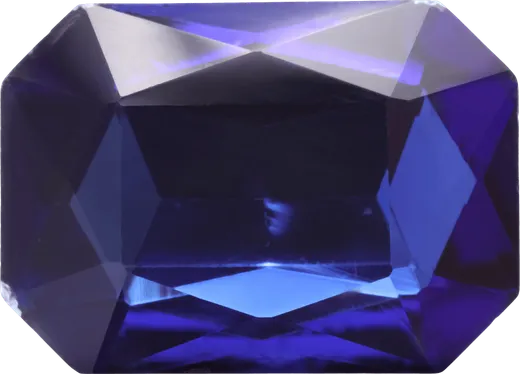
Sapphire
Sapphire is not always blue — within corundum, every colour but red is called sapphire. Many people wear one for years without ever knowing this.
Sapphire is every colour of corundum except red — within the corundum family, all but red (ruby) is called sapphire, Mohs hardness 9. It is the most versatile of the coloured gemstones and the best suited to daily wear. Heating is the norm; beware diffusion treatment. It is September’s birthstone.
About Sapphire
Sapphire and ruby are the same mineral, corundum, at hardness 9; iron and titanium turn it blue, while pink, yellow, purple, orange and colourless are together called fancy sapphire. Within corundum, only the red is ruby; every other colour is sapphire. Hard and tough, it is the coloured gemstone best made for everyday wear.
Why Choose a Sapphire
Sapphire is September’s birthstone, a symbol of loyalty and wisdom, and its use in royal engagement rings adds a story of its own; with many colours and high hardness, it is the most versatile of all. The pink-orange “padparadscha” (lotus sapphire) is the rarest and most coveted colour — a warmth caught between sunset and lotus flower.
History & Famous Stones
Sapphire has been the stone of loyalty and wisdom since antiquity — seen in royal engagement rings and museum centrepieces alike; its most storied origins are Kashmir and Ceylon (Sri Lanka). A few legendary sapphires are names of the auction room and the museum:
- The Star of India: 563.35 carats, a star sapphire from Sri Lanka — one of the largest star sapphires in the world, now at the American Museum of Natural History in New York.
- The Blue Belle of Asia: 392.52 carats, an unheated Ceylon sapphire, sold in 2014 for about US$17.5 million — the most expensive sapphire ever sold at auction.
- The Logan Sapphire: 422.99 carats, the second-largest faceted blue sapphire in the world, now in the Smithsonian.
The Truth About Sapphire
Heating is the norm (declared, it is normal); beware diffusion treatment, especially beryllium diffusion; origin and heat status move the value.
- Truth one: heating is the norm. Common in the sapphire world and accepted by the trade; declared honestly, it is normal.
- Truth two: beware diffusion. Surface diffusion colours only a “skin”; beryllium diffusion reaches deeper and can create a padparadscha-like pink-orange, yet is worth a fraction of natural colour.
- Truth three: origin and heat status move the value. Kashmir (briefly mined in the 1880s) is the historic peak; Myanmar (Burma) and Ceylon (Sri Lanka) are famous names too.
- Truth four: before you read the stone, learn to read the certificate — treatment and origin are both written there.
Sapphire on the Market
Tell apart natural (unheated / heated), diffusion-treated, padparadscha and synthetic; prices vary enormously, and the certificate is key.
| Type | Traits | Price | How to tell |
|---|---|---|---|
| Natural · unheated | Natural colour + origin report | Highest | Report reads “no heat” |
| Natural · heated | Standard, more even colour | High | Report notes heating |
| Diffusion (incl. beryllium) | Surface-coloured layer | Low | Report reads “diffusion” |
| Padparadscha (lotus) | Pink-orange, rare | High | Certificate, natural colour |
| Synthetic / glass | Too perfect | Low | Certificate, inclusion traits |
Before You Buy
Choose a sapphire for beauty of colour over depth of colour; heating is acceptable, diffusion must be priced apart; padparadscha and “unheated” both rest on the certificate.
- Choose a sapphire on beauty of colour more than depth; the good ones let light pass through.
- Know the treatment: heating is acceptable, diffusion (especially beryllium) is another matter.
- Where a premium is involved (padparadscha, unheated, top origin), rely on the certificate.
- Look at it once in daylight and once under indoor light — do not be fooled by a single lamp.
FAQ
Is a sapphire always blue?
No. Every colour of corundum but red (which is ruby) is called sapphire — including pink, yellow, purple, orange and colourless, together known as fancy sapphire.
Is heating a sapphire normal?
Yes. Heating is standard in the trade and, honestly declared, legitimate. What to guard against is diffusion treatment (especially beryllium diffusion), which is worth far less.
What is padparadscha?
A pink-orange "lotus" sapphire — the rarest and most sought-after colour of all, to be confirmed by certificate.
Can I wear a sapphire every day?
Yes. At hardness 9, second only to diamond, and tough as well, it is the most hard-wearing of the coloured gemstones.
How do I clean a sapphire?
Warm water and a soft brush; an unfilled sapphire generally takes ultrasonic, though avoid it if there are obvious fractures.